The Overwhelm Wasn't Volume. It Was Opacity.
Every struggling programme I've ever been brought into looks the same from the outside: too much work, not enough time, a team that's clearly stretched. That's the story everyone tells. It's usually wrong.
I've sat in enough recovery kickoffs to notice the pattern. Ask the team what they're doing and you get a confident answer. Ask them what's actually blocked, what's quietly slipping, what depends on what, and the confident answer runs out fast. Not because nobody's working. Because nobody can see the whole thing at once, including, often, the person running it.
The volume story is comforting, and wrong
"We're just too busy" is an easy diagnosis. It doesn't implicate the plan, the reporting, or the decisions that got made without anyone noticing they were decisions. It just means: work harder, hire more, push the deadline. Sometimes that's even true. Far more often, the same team, doing the same amount of work, would be fine, if they could see what they were actually carrying.
Opacity is the real cost. Not the size of the backlog, the fact that nobody has an honest, current picture of it. Status reports that reflect what was true two weeks ago. A RAG rating that's been amber so long it's stopped meaning anything. Dependencies that live in someone's head instead of anywhere reviewable. The work isn't out of control. The visibility is.
Clarity beats productivity
This is the uncomfortable bit for anyone who likes a productivity framework: making people work faster inside an opaque system doesn't fix an opaque system. It just means bad decisions get made with more energy behind them.
What actually turns a struggling programme around, in my experience, isn't a new methodology. It's the unglamorous work of making the real state of things visible again: what's actually done, what's actually blocked, what depends on what, who's holding what risk. Nine times out of ten, once that's honest and current, the "overwhelm" turns out to be a handful of specific, nameable problems, not an undifferentiated wall of too much.
Diagnosis before treatment
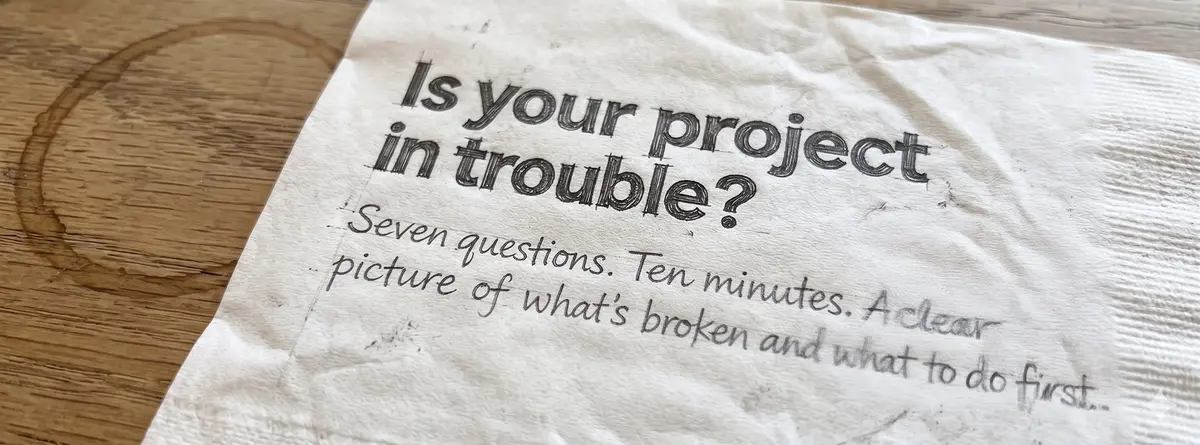
This is the same instinct behind the triage tool I built: you can't fix what you can't see clearly, and most teams under pressure stop looking, because looking honestly is its own kind of hard work. The seeing problem always outranks the doing problem. Solve it first, and the doing problem is usually smaller than anyone thought.
Written by Steve Drew — most of his career running delivery inside large organisations, currently building ka-do alone.
See how I help with programme recovery →Get new posts by email
Occasional, no spam. Unsubscribe anytime.